Hankins Leave Sudan
There were tears, prayers, singing and heartfelt thanks as Boo and Phyllis Hankins met one last time with the United Methodist pastors in Sudan District. After two years of mission service in Sudan Boo and Phyllis Hankins are leaving Sudan, to return to serve churches in Tennessee at the request of Bishop Swanson of Holston Conference. In fact, they left 3 days ago after preparing Diantha and I to respond to interim tasks such as unexpected medical needs of pastors and the ongoing support of several orphans and sponsored students. The Sudanese pastors thanked them for strengthening the churches and teaching them English and more. Their fellow missionaries thanked them for their example of teamwork and endurance as they persevered resolving crises in church and school. Diantha and I are grateful that God used them to do the difficult pioneering work in the development of the church here, work that not many others we know would be able or willing to do. Twenty-two years of the traumas of war and refugee camps leave deep wounds in peoples' hearts; in the case of the Sudanese United Methodists, these wounds have been exacerbated by the corrupt behavior of several former local church leaders which has deepened a prevailing sense of mistrust. The Hankins have worked step by step with these church members to build stability, continuity, and a sense of being part of a much large connection that will not let them be the victims of the whims of individuals any more.
Women's Division Team Visits Sudan
Two staff (Marva Usher-Kerr, Carol Van Gorp) and a Board member (Ollie Pleggenkuhle) of the Women's Division of the General Board visited South Sudan in April. They held a workshop for the United Methodist Women leaders to help them develop come together as a district, and develop some goals. In preparation for their visit, Diantha researched the existing programs for women's literacy in South Sudan, and the effectiveness of different approaches. We are hoping for their continued support of agricultural training for women, and continue to explore with them a possible approach to increasing the literacy of women, and of beginning village micro-finance programs that would put management of credit in the hands of trained village committees controlled by women.
Reducing Poverty: Our thinking advances...
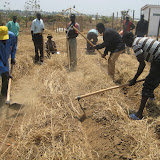
For 9 months we have been thinking day and night about the issues of poverty we see daily: hunger, lack of money to pay for school fees or medicines. We can see now how the pieces might fit together to allow people to improve their life situations: now they have little income, so there are always more demands and urgent needs and their culture encourages them to help others rather than saving. If we could help them start micro-finance programs, in the future it would allow people to add up small savings in a village "bank" that they manage collectively, and learn to manage their money, which could be used to start income-generating activities or to pay for household needs such as school fees and medicines. There's another key piece of the puzzle: they need to improve their income, which in rural South Sudan mainly means improving agricultural yields and income so they can grow enough for their families, and have some left over to sell. Yet another piece: health is important. If they learn to improve their health and even to grow some of the medicinal plants they need, they are strong enough to contribute to the family income; but if they are sick, they deplete the family income.
Collaboration Blossoms
"How very good and pleasant it is when kindred live together in unity!" (Ps. 133:1) From the time we got here, we've tried to get to know the other groups and people at work in South Sudan, especially in health, agriculture, education and micro-finance. The result last fall was that Diantha was invited by an NGO to help create a manual for training community health workers, and I was asked to be part of interdenominational trainings for pastors youth. At our request, another mission group provided our UM nursery schools with digital players with a variety of teacher training lessons on them. In March we contracted with a Christian Reformed group to provide training for 31 farmers from United Methodist churches. We were concerned that there was no regular gatherings of people doing similar work, to share progress and consider working together; so Diantha and I played a key role in starting monthly informal "teas" around agriculture and another around health. Since then the cooperative work has exploded: the same Christian Reformed group has offered to train for free, two groups of 50 farmers on improved cassava and sweet potatoes from two different villages where there are UM churches; UMCOR is working with us to select one of our remote UM churches for a fish-farming project and is trying to set up a health project so that it benefits another of more remote villages where there is a UM church. While our budget is tiny compared to the other mission and NGO groups here, or perhaps partly because of it, a lot is happening to help the villages we focus on, because of the growing willingness to collaborate.
Showing posts with label health. Show all posts
Showing posts with label health. Show all posts
Wednesday, May 11, 2011

Sunday, November 7, 2010
Mission in Africa: November 7
We have had three U.S. doctors here for a week, in part so that two of them (husband and wife) could continue their discernment about whether God might be calling them to Sudan next year. Diantha and I really hope so. They are particularly interested in improving the rural health situation, including preventing sickness through improving health practices in the community, which is our focus as well, and it was greatly encouraging to us and especially to Diantha to think we might have colleagues to work with on this. Diantha and I urged that their schedule while they were here should include some meetings with women and others from the villages to ask them about the health situation in the villages, and to answer their questions about medical matters. The three such "hearings" (plus another with the United Methodist pastors) were great, though exhausting. One piece of good news we gleaned was that the WaSH --Water, Sanitation, Hygiene -- training Diantha has been doing is well accepted and appreciated. The bad news was the reminder that the cost of medicines, of getting to the clinics in the main city of Yei, and of the clinic fees is prohibitive to most people. Time and time again the doctors' answer to a medical question quite rightly was, "You need to go to a clinic and be seen." It really came home to me that the only way that this huge barrier will be overcome in the long run is to help people increase income so they can afford these costs; this is another way my agricultural and economic development work is connected to the crucial work of improving health. And another distressing bit of news was that almost no one in the villages we visited had bed nets! The exception was those pregnant women who went to prenatal appointments (not all did) and got one bed net. The NGO that was giving them out free last year has ended that program. Diantha and I will begin some fundraising right away to buy 5 or 10 bednets at least for each of the 17 villages we are working in.
To relax last night, we watched a movie the Hankins brought with them, K-PAX. It was a powerful reminder of the huge impact of personal trauma (one character's wife and daughter are killed) on an individual's ability to cope and live in reality. My immediate thought during the movie was that we are living among a whole people under this kind of Post Traumatic Stress. So many here (estimates are about 50%) have experienced such a trauma, and it can't help affecting the way they live and relate to each other and to us. So many have seen family and friends brutally killed, seeing neighbors fight over resources in the refugee camps and the bush where they have been for 20+ years, so many have felt and still feel left behind or feel guilty for leaving someone behind, so many have been treated as less than human by not only by enemy soldiers but sometimes the host population around the refugee camps. While I know some of what surprises us here is a matter of a different cultural attitude toward money and relationships that we are learning to respect, still I wonder if widespread PTSD -- or something like it -- at least partly explains some of things we've noticed as we've gotten to know people here: the fear of being forgotten, mistrust of each other (and us), difficulty in accepting rules and authorities, and grabbing resources for oneself at the expense of others. I suspect that the implications for our life here include (1) be very patient with people even when they disappoint us (2) make it clear again and again that we are here for several years to devote time, knowledge and some resources into a series of developments they think are important (3) follow through on anything we promise to do and not promise anything we can't do (4) continue working hard at building friendships and relationships that are genuine and respectful. To do these things I think we'll have to make a serious commitment to listen, especially before we speak; a listening that includes learning about their culture, and a listening that includes trying to take into account the traumas of their lives.
To relax last night, we watched a movie the Hankins brought with them, K-PAX. It was a powerful reminder of the huge impact of personal trauma (one character's wife and daughter are killed) on an individual's ability to cope and live in reality. My immediate thought during the movie was that we are living among a whole people under this kind of Post Traumatic Stress. So many here (estimates are about 50%) have experienced such a trauma, and it can't help affecting the way they live and relate to each other and to us. So many have seen family and friends brutally killed, seeing neighbors fight over resources in the refugee camps and the bush where they have been for 20+ years, so many have felt and still feel left behind or feel guilty for leaving someone behind, so many have been treated as less than human by not only by enemy soldiers but sometimes the host population around the refugee camps. While I know some of what surprises us here is a matter of a different cultural attitude toward money and relationships that we are learning to respect, still I wonder if widespread PTSD -- or something like it -- at least partly explains some of things we've noticed as we've gotten to know people here: the fear of being forgotten, mistrust of each other (and us), difficulty in accepting rules and authorities, and grabbing resources for oneself at the expense of others. I suspect that the implications for our life here include (1) be very patient with people even when they disappoint us (2) make it clear again and again that we are here for several years to devote time, knowledge and some resources into a series of developments they think are important (3) follow through on anything we promise to do and not promise anything we can't do (4) continue working hard at building friendships and relationships that are genuine and respectful. To do these things I think we'll have to make a serious commitment to listen, especially before we speak; a listening that includes learning about their culture, and a listening that includes trying to take into account the traumas of their lives.
Monday, February 15, 2010
Training for Sudan Mission Work
HODGES’ SCHEDULE OF TRAINING TO PREPARE FOR SUDAN MISSION WORK
We believe that though we have years of background experience in health development, agricultural and microenterprise development in the U.S., it would greatly improve the impact of the future mission work we hope to do in Sudan to use our time now to get as much additional training as we can, while we can, which is particularly relevant to the particular setting of Sudan, including tropical climate and reality of village life. This is so important that we are willing to pay the cost of these trainings ourselves, though of course we would welcome anyone who decided to help; we are hoping this might work through a fund set up at Holston Conference. Contact us to find out more, at shodgesjubilee@yahoo.com.
Sep. 27-Oct. 2 (Diantha attended) CHE (Community Health Evangelism) Seminar at Equip, International in Marion, NC. Six-day training in a holistic approach to facilitating village planning and implementation around health, sanitation, clean water supply, literacy, family-based business, agriculture and evangelism; focused especially on a train-the-trainer approach to developing village leaders, and on using visual and role-playing methods that work with persons of limited literacy. Cost: $750
Dec. 7-11 (Steve and Diantha attended) ECHO Tropical Agriculture Conference, Ft. Myers, FL. (description of content and value). Three-day conference by this mission resource group included lectures and workshops on participatory community and agricultural development, agroforestry, cross-cultural communication, sustaining food production, appropriate technology in the village, biodiesel production, sand dams to store water, moringa and African medicinal plants, fruit tree propagation, building smoke-free efficient stoves, fish farming, and nutrition gardens. We had a chance to meet and get contact information for several missionaries doing agricultural development in Uganda, Kenya, Central African Republic, and Democratic Republic of Congo. Cost: $1310
Jan. 21-23 (Steve attended) Southern Sustainable Agriculture Conference, Chattanooga, TN. Three-day conference by the leading sustainable agriculture organization in 13 states of the southeast US included workshops on raising poultry, on-farm poultry processing, holistic animal healthcare, seed saving methods, farm machinery, building soil through cover cropping and composting. Steve was able to network with 4 persons who had done sustainable agricultural and health care work in Africa, including a Presbyterian missionary couple who have been doing agricultural work in northern Uganda for over 15 years. Cost: $42.61 (most expenses paid by SSARE and SSAWG Board scholarships)
Feb. 18-20 (Steve) Georgia Organics Conference, Athens, GA. Two-day conference will include workshops on basic engine operation and diagnosis for farm equipment; use of draft animals to grind meal and for other purposes; using forage plants to control worms in livestock; soil testing and fertility; and seed saving for warm-climate seeds. Estimated Cost: $747.72
Mar. 6 (Steve) Organic Growers’ School of Western North Carolina. Steve will attend one day conference to take workshops on poultry health, composting manure, and making cheese from goat milk. Estimated Cost: $190.30
Mar. 11-12 (Steve and Diantha) Sudan Summit, Kingsport, TN. No cost expected.
April 11-17 (Steve) Health, Agriculture, Culture and Community Workshop, at ECHO in Ft. Myers. FL. Five-day training that brings together principles of health, agriculture, cross-cultural communication, and skills in establishing relationships in the context of Christian mission that facilitate changes in the unhealthy behavior – including that rooted in culturally determined beliefs and values – that contribute to significant health problems. Includes an understanding of cultural anthropology, and practice of methods of cross-cultural communications. Estimated cost: $897
April 25-30 (Steve) Water, Sanitation and Hygiene Community Training, at Equip in Marion, NC. Diantha was originally scheduled to take this, but cannot due to radiation therapy. Six-day training to teach community development approaches in the context of Christian mission to improvement in water quality and supply in order to reduce diarrheal and other diseases. Includes an emphasis on learning how to train others to replicate the process. Estimated cost: $655
May 23-June 3 (Diantha) Missionary Medicine Intensive – MMI at Equip in Marion, NC. Two-week course providing training in step-by-step methods to diagnose hundreds of tropical diseases, injuries, and illnesses. Lectures and hands-on labs cover the above topics as well as midwifery, physical examination methods, and skills of suturing, splinting, calculating dosages and rehydration fluids, sterilizing, and other topics. Estimated cost: $1120
Steve and Diantha Hodges
shodgesjubilee@yahoo.com
423-733-4436
We believe that though we have years of background experience in health development, agricultural and microenterprise development in the U.S., it would greatly improve the impact of the future mission work we hope to do in Sudan to use our time now to get as much additional training as we can, while we can, which is particularly relevant to the particular setting of Sudan, including tropical climate and reality of village life. This is so important that we are willing to pay the cost of these trainings ourselves, though of course we would welcome anyone who decided to help; we are hoping this might work through a fund set up at Holston Conference. Contact us to find out more, at shodgesjubilee@yahoo.com.
Sep. 27-Oct. 2 (Diantha attended) CHE (Community Health Evangelism) Seminar at Equip, International in Marion, NC. Six-day training in a holistic approach to facilitating village planning and implementation around health, sanitation, clean water supply, literacy, family-based business, agriculture and evangelism; focused especially on a train-the-trainer approach to developing village leaders, and on using visual and role-playing methods that work with persons of limited literacy. Cost: $750
Dec. 7-11 (Steve and Diantha attended) ECHO Tropical Agriculture Conference, Ft. Myers, FL. (description of content and value). Three-day conference by this mission resource group included lectures and workshops on participatory community and agricultural development, agroforestry, cross-cultural communication, sustaining food production, appropriate technology in the village, biodiesel production, sand dams to store water, moringa and African medicinal plants, fruit tree propagation, building smoke-free efficient stoves, fish farming, and nutrition gardens. We had a chance to meet and get contact information for several missionaries doing agricultural development in Uganda, Kenya, Central African Republic, and Democratic Republic of Congo. Cost: $1310
Jan. 21-23 (Steve attended) Southern Sustainable Agriculture Conference, Chattanooga, TN. Three-day conference by the leading sustainable agriculture organization in 13 states of the southeast US included workshops on raising poultry, on-farm poultry processing, holistic animal healthcare, seed saving methods, farm machinery, building soil through cover cropping and composting. Steve was able to network with 4 persons who had done sustainable agricultural and health care work in Africa, including a Presbyterian missionary couple who have been doing agricultural work in northern Uganda for over 15 years. Cost: $42.61 (most expenses paid by SSARE and SSAWG Board scholarships)
Feb. 18-20 (Steve) Georgia Organics Conference, Athens, GA. Two-day conference will include workshops on basic engine operation and diagnosis for farm equipment; use of draft animals to grind meal and for other purposes; using forage plants to control worms in livestock; soil testing and fertility; and seed saving for warm-climate seeds. Estimated Cost: $747.72
Mar. 6 (Steve) Organic Growers’ School of Western North Carolina. Steve will attend one day conference to take workshops on poultry health, composting manure, and making cheese from goat milk. Estimated Cost: $190.30
Mar. 11-12 (Steve and Diantha) Sudan Summit, Kingsport, TN. No cost expected.
April 11-17 (Steve) Health, Agriculture, Culture and Community Workshop, at ECHO in Ft. Myers. FL. Five-day training that brings together principles of health, agriculture, cross-cultural communication, and skills in establishing relationships in the context of Christian mission that facilitate changes in the unhealthy behavior – including that rooted in culturally determined beliefs and values – that contribute to significant health problems. Includes an understanding of cultural anthropology, and practice of methods of cross-cultural communications. Estimated cost: $897
April 25-30 (Steve) Water, Sanitation and Hygiene Community Training, at Equip in Marion, NC. Diantha was originally scheduled to take this, but cannot due to radiation therapy. Six-day training to teach community development approaches in the context of Christian mission to improvement in water quality and supply in order to reduce diarrheal and other diseases. Includes an emphasis on learning how to train others to replicate the process. Estimated cost: $655
May 23-June 3 (Diantha) Missionary Medicine Intensive – MMI at Equip in Marion, NC. Two-week course providing training in step-by-step methods to diagnose hundreds of tropical diseases, injuries, and illnesses. Lectures and hands-on labs cover the above topics as well as midwifery, physical examination methods, and skills of suturing, splinting, calculating dosages and rehydration fluids, sterilizing, and other topics. Estimated cost: $1120
Steve and Diantha Hodges
shodgesjubilee@yahoo.com
423-733-4436
Subscribe to:
Posts (Atom)