Farming God's Way (FGW) Moves Forward
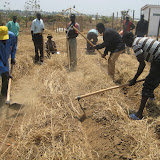
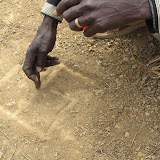
Small steps forward for this method of conservation agriculture in which soil fertility and scarce water is kept and increased both by not plowing and by covering the ground with a layer of mulch; and by adding natural fertilizers like composted grass and manure. FGW incorporates principles from observing Creation and from the Bible that works well to teach these methods in the villages of south Sudan. I held a workshop February 16 for 19 UM pastors and assistant pastors (I expected 10!) to introduce them to FGW; as a result, so far two pastors (from Logo and Mirodu villages) reporting to me that they have prepared a sample plot using these methods and are ready for me to supply them with maize (corn) seed so they can try it out! This makes me very happy. As of today I am proud to announce that Eden Teaching Farm of the Sudan District has officially begun what the new UN report on agroecology (conservation agriculture) calls "decentralized participatory research."
Not only that, but these methods may help Darfur in the north of Sudan. I've had a couple detailed email exchanges with a colleague in Darfur who hopes to use these methods there, and have tried to help her figure out how to adapt the the FGW methods to that area which has drier climate and scarcer resources than we in the south. I'm eager to see what may work there.
Steps forward on the global scene too: I've just discovered a new UN report (December 2010) advocating strongly for increasing the practice and scale of agroecology to increase food security and help small farmers worldwide; and a decision by the Food and Agriculture Organization (FAO) of the U.N. in June 2010 to promote this "integrated holistic approach" for sustainable crop intensification. They even mention the importance of "learning by doing" and of partnering with non-governmental groups at the local level. So far the farming methods we are beginning here is not yet widely accepted or practiced in Sudan, but this tells me it will be promoted more and more. I'm encouraged in my work and thankful to be helping the villages and churches we work with to be involved at the beginning of an important movement.
Steps Forward in Development Hearts and Minds, too
We (mostly Diantha due to my limited mobility on motorcycles) have now completed basic strategic planning meetings in 13out of 17 villages, a process we began last September. We had no idea it would take so long! But we're excited by what's happening. We invite each church to choose an initial project that must meet 4 criteria: (1) It must address a top priority identified by the village during the planning meeting (2) It must involve investment by the village of labor, materials, or both (3) It must require no more than US $150 from us (4) It must be able to be started soon and completed in 4 months or less, so that the church and village have an immediate sense of succeeding in the long path to development. The results are interesting: Three churches have chosen an initial project in agricultural training because they reason that increased production will mean they have more food not only to eat but to sell to get money for school fees, medicines, and other crucial needs. Seven churches have chosen to build an additional school "building" (simply a thatched roof) so they can move more classes from under the trees and expand the number of village children who can be educated (for many of these children the church school is their only option as they cannot afford the higher fees of the government schools, which also may be too far away to walk to). And one church has chosen to build latrines so that their school children can improve their health. One church wants help to get culverts in the road to make it passable in the rainy season and allow their children to walk to school even in the rainy season. The reasoning behind their choices are gratifying. So are, increasingly, the comments made during the planning process. We always ask early on in the meeting for a list of things people are thankful for, as well as (inevitably) a list of what they need. During the first planning meetings last fall, the lists were predictable: they were thankful for their church and the local school the church had begun, the seeds and tools they have been given, the bore hole (deep well) dug with funds from US churches. But since the Referendum in January, the list of thanksgivings have been changing and deepening. We hear thanks for the Referendum, thanks for freedom and peace; and we often hear thanks for the improved life of women. Women are thankful for liberation from the fear that a harsh version of sharia (islamic) law could be imposed on them; thankful that the new government is making a commitment to the rights of women including making women 50% of all government leaders; thankful for a focus on decreasing gender based violence. While the villages and the churches, like the towns and the government, still have a long way to go to put all these changes into practice, its great to hear the excitement and hope in these comments. We feel privileged to be here, doing this, at this time.
Showing posts with label village. Show all posts
Showing posts with label village. Show all posts
Saturday, April 2, 2011

Sunday, November 7, 2010
Mission in Africa: November 7
We have had three U.S. doctors here for a week, in part so that two of them (husband and wife) could continue their discernment about whether God might be calling them to Sudan next year. Diantha and I really hope so. They are particularly interested in improving the rural health situation, including preventing sickness through improving health practices in the community, which is our focus as well, and it was greatly encouraging to us and especially to Diantha to think we might have colleagues to work with on this. Diantha and I urged that their schedule while they were here should include some meetings with women and others from the villages to ask them about the health situation in the villages, and to answer their questions about medical matters. The three such "hearings" (plus another with the United Methodist pastors) were great, though exhausting. One piece of good news we gleaned was that the WaSH --Water, Sanitation, Hygiene -- training Diantha has been doing is well accepted and appreciated. The bad news was the reminder that the cost of medicines, of getting to the clinics in the main city of Yei, and of the clinic fees is prohibitive to most people. Time and time again the doctors' answer to a medical question quite rightly was, "You need to go to a clinic and be seen." It really came home to me that the only way that this huge barrier will be overcome in the long run is to help people increase income so they can afford these costs; this is another way my agricultural and economic development work is connected to the crucial work of improving health. And another distressing bit of news was that almost no one in the villages we visited had bed nets! The exception was those pregnant women who went to prenatal appointments (not all did) and got one bed net. The NGO that was giving them out free last year has ended that program. Diantha and I will begin some fundraising right away to buy 5 or 10 bednets at least for each of the 17 villages we are working in.
To relax last night, we watched a movie the Hankins brought with them, K-PAX. It was a powerful reminder of the huge impact of personal trauma (one character's wife and daughter are killed) on an individual's ability to cope and live in reality. My immediate thought during the movie was that we are living among a whole people under this kind of Post Traumatic Stress. So many here (estimates are about 50%) have experienced such a trauma, and it can't help affecting the way they live and relate to each other and to us. So many have seen family and friends brutally killed, seeing neighbors fight over resources in the refugee camps and the bush where they have been for 20+ years, so many have felt and still feel left behind or feel guilty for leaving someone behind, so many have been treated as less than human by not only by enemy soldiers but sometimes the host population around the refugee camps. While I know some of what surprises us here is a matter of a different cultural attitude toward money and relationships that we are learning to respect, still I wonder if widespread PTSD -- or something like it -- at least partly explains some of things we've noticed as we've gotten to know people here: the fear of being forgotten, mistrust of each other (and us), difficulty in accepting rules and authorities, and grabbing resources for oneself at the expense of others. I suspect that the implications for our life here include (1) be very patient with people even when they disappoint us (2) make it clear again and again that we are here for several years to devote time, knowledge and some resources into a series of developments they think are important (3) follow through on anything we promise to do and not promise anything we can't do (4) continue working hard at building friendships and relationships that are genuine and respectful. To do these things I think we'll have to make a serious commitment to listen, especially before we speak; a listening that includes learning about their culture, and a listening that includes trying to take into account the traumas of their lives.
To relax last night, we watched a movie the Hankins brought with them, K-PAX. It was a powerful reminder of the huge impact of personal trauma (one character's wife and daughter are killed) on an individual's ability to cope and live in reality. My immediate thought during the movie was that we are living among a whole people under this kind of Post Traumatic Stress. So many here (estimates are about 50%) have experienced such a trauma, and it can't help affecting the way they live and relate to each other and to us. So many have seen family and friends brutally killed, seeing neighbors fight over resources in the refugee camps and the bush where they have been for 20+ years, so many have felt and still feel left behind or feel guilty for leaving someone behind, so many have been treated as less than human by not only by enemy soldiers but sometimes the host population around the refugee camps. While I know some of what surprises us here is a matter of a different cultural attitude toward money and relationships that we are learning to respect, still I wonder if widespread PTSD -- or something like it -- at least partly explains some of things we've noticed as we've gotten to know people here: the fear of being forgotten, mistrust of each other (and us), difficulty in accepting rules and authorities, and grabbing resources for oneself at the expense of others. I suspect that the implications for our life here include (1) be very patient with people even when they disappoint us (2) make it clear again and again that we are here for several years to devote time, knowledge and some resources into a series of developments they think are important (3) follow through on anything we promise to do and not promise anything we can't do (4) continue working hard at building friendships and relationships that are genuine and respectful. To do these things I think we'll have to make a serious commitment to listen, especially before we speak; a listening that includes learning about their culture, and a listening that includes trying to take into account the traumas of their lives.
Monday, February 15, 2010
Training for Sudan Mission Work
HODGES’ SCHEDULE OF TRAINING TO PREPARE FOR SUDAN MISSION WORK
We believe that though we have years of background experience in health development, agricultural and microenterprise development in the U.S., it would greatly improve the impact of the future mission work we hope to do in Sudan to use our time now to get as much additional training as we can, while we can, which is particularly relevant to the particular setting of Sudan, including tropical climate and reality of village life. This is so important that we are willing to pay the cost of these trainings ourselves, though of course we would welcome anyone who decided to help; we are hoping this might work through a fund set up at Holston Conference. Contact us to find out more, at shodgesjubilee@yahoo.com.
Sep. 27-Oct. 2 (Diantha attended) CHE (Community Health Evangelism) Seminar at Equip, International in Marion, NC. Six-day training in a holistic approach to facilitating village planning and implementation around health, sanitation, clean water supply, literacy, family-based business, agriculture and evangelism; focused especially on a train-the-trainer approach to developing village leaders, and on using visual and role-playing methods that work with persons of limited literacy. Cost: $750
Dec. 7-11 (Steve and Diantha attended) ECHO Tropical Agriculture Conference, Ft. Myers, FL. (description of content and value). Three-day conference by this mission resource group included lectures and workshops on participatory community and agricultural development, agroforestry, cross-cultural communication, sustaining food production, appropriate technology in the village, biodiesel production, sand dams to store water, moringa and African medicinal plants, fruit tree propagation, building smoke-free efficient stoves, fish farming, and nutrition gardens. We had a chance to meet and get contact information for several missionaries doing agricultural development in Uganda, Kenya, Central African Republic, and Democratic Republic of Congo. Cost: $1310
Jan. 21-23 (Steve attended) Southern Sustainable Agriculture Conference, Chattanooga, TN. Three-day conference by the leading sustainable agriculture organization in 13 states of the southeast US included workshops on raising poultry, on-farm poultry processing, holistic animal healthcare, seed saving methods, farm machinery, building soil through cover cropping and composting. Steve was able to network with 4 persons who had done sustainable agricultural and health care work in Africa, including a Presbyterian missionary couple who have been doing agricultural work in northern Uganda for over 15 years. Cost: $42.61 (most expenses paid by SSARE and SSAWG Board scholarships)
Feb. 18-20 (Steve) Georgia Organics Conference, Athens, GA. Two-day conference will include workshops on basic engine operation and diagnosis for farm equipment; use of draft animals to grind meal and for other purposes; using forage plants to control worms in livestock; soil testing and fertility; and seed saving for warm-climate seeds. Estimated Cost: $747.72
Mar. 6 (Steve) Organic Growers’ School of Western North Carolina. Steve will attend one day conference to take workshops on poultry health, composting manure, and making cheese from goat milk. Estimated Cost: $190.30
Mar. 11-12 (Steve and Diantha) Sudan Summit, Kingsport, TN. No cost expected.
April 11-17 (Steve) Health, Agriculture, Culture and Community Workshop, at ECHO in Ft. Myers. FL. Five-day training that brings together principles of health, agriculture, cross-cultural communication, and skills in establishing relationships in the context of Christian mission that facilitate changes in the unhealthy behavior – including that rooted in culturally determined beliefs and values – that contribute to significant health problems. Includes an understanding of cultural anthropology, and practice of methods of cross-cultural communications. Estimated cost: $897
April 25-30 (Steve) Water, Sanitation and Hygiene Community Training, at Equip in Marion, NC. Diantha was originally scheduled to take this, but cannot due to radiation therapy. Six-day training to teach community development approaches in the context of Christian mission to improvement in water quality and supply in order to reduce diarrheal and other diseases. Includes an emphasis on learning how to train others to replicate the process. Estimated cost: $655
May 23-June 3 (Diantha) Missionary Medicine Intensive – MMI at Equip in Marion, NC. Two-week course providing training in step-by-step methods to diagnose hundreds of tropical diseases, injuries, and illnesses. Lectures and hands-on labs cover the above topics as well as midwifery, physical examination methods, and skills of suturing, splinting, calculating dosages and rehydration fluids, sterilizing, and other topics. Estimated cost: $1120
Steve and Diantha Hodges
shodgesjubilee@yahoo.com
423-733-4436
We believe that though we have years of background experience in health development, agricultural and microenterprise development in the U.S., it would greatly improve the impact of the future mission work we hope to do in Sudan to use our time now to get as much additional training as we can, while we can, which is particularly relevant to the particular setting of Sudan, including tropical climate and reality of village life. This is so important that we are willing to pay the cost of these trainings ourselves, though of course we would welcome anyone who decided to help; we are hoping this might work through a fund set up at Holston Conference. Contact us to find out more, at shodgesjubilee@yahoo.com.
Sep. 27-Oct. 2 (Diantha attended) CHE (Community Health Evangelism) Seminar at Equip, International in Marion, NC. Six-day training in a holistic approach to facilitating village planning and implementation around health, sanitation, clean water supply, literacy, family-based business, agriculture and evangelism; focused especially on a train-the-trainer approach to developing village leaders, and on using visual and role-playing methods that work with persons of limited literacy. Cost: $750
Dec. 7-11 (Steve and Diantha attended) ECHO Tropical Agriculture Conference, Ft. Myers, FL. (description of content and value). Three-day conference by this mission resource group included lectures and workshops on participatory community and agricultural development, agroforestry, cross-cultural communication, sustaining food production, appropriate technology in the village, biodiesel production, sand dams to store water, moringa and African medicinal plants, fruit tree propagation, building smoke-free efficient stoves, fish farming, and nutrition gardens. We had a chance to meet and get contact information for several missionaries doing agricultural development in Uganda, Kenya, Central African Republic, and Democratic Republic of Congo. Cost: $1310
Jan. 21-23 (Steve attended) Southern Sustainable Agriculture Conference, Chattanooga, TN. Three-day conference by the leading sustainable agriculture organization in 13 states of the southeast US included workshops on raising poultry, on-farm poultry processing, holistic animal healthcare, seed saving methods, farm machinery, building soil through cover cropping and composting. Steve was able to network with 4 persons who had done sustainable agricultural and health care work in Africa, including a Presbyterian missionary couple who have been doing agricultural work in northern Uganda for over 15 years. Cost: $42.61 (most expenses paid by SSARE and SSAWG Board scholarships)
Feb. 18-20 (Steve) Georgia Organics Conference, Athens, GA. Two-day conference will include workshops on basic engine operation and diagnosis for farm equipment; use of draft animals to grind meal and for other purposes; using forage plants to control worms in livestock; soil testing and fertility; and seed saving for warm-climate seeds. Estimated Cost: $747.72
Mar. 6 (Steve) Organic Growers’ School of Western North Carolina. Steve will attend one day conference to take workshops on poultry health, composting manure, and making cheese from goat milk. Estimated Cost: $190.30
Mar. 11-12 (Steve and Diantha) Sudan Summit, Kingsport, TN. No cost expected.
April 11-17 (Steve) Health, Agriculture, Culture and Community Workshop, at ECHO in Ft. Myers. FL. Five-day training that brings together principles of health, agriculture, cross-cultural communication, and skills in establishing relationships in the context of Christian mission that facilitate changes in the unhealthy behavior – including that rooted in culturally determined beliefs and values – that contribute to significant health problems. Includes an understanding of cultural anthropology, and practice of methods of cross-cultural communications. Estimated cost: $897
April 25-30 (Steve) Water, Sanitation and Hygiene Community Training, at Equip in Marion, NC. Diantha was originally scheduled to take this, but cannot due to radiation therapy. Six-day training to teach community development approaches in the context of Christian mission to improvement in water quality and supply in order to reduce diarrheal and other diseases. Includes an emphasis on learning how to train others to replicate the process. Estimated cost: $655
May 23-June 3 (Diantha) Missionary Medicine Intensive – MMI at Equip in Marion, NC. Two-week course providing training in step-by-step methods to diagnose hundreds of tropical diseases, injuries, and illnesses. Lectures and hands-on labs cover the above topics as well as midwifery, physical examination methods, and skills of suturing, splinting, calculating dosages and rehydration fluids, sterilizing, and other topics. Estimated cost: $1120
Steve and Diantha Hodges
shodgesjubilee@yahoo.com
423-733-4436
Subscribe to:
Posts (Atom)